
Fire Pit vs Chiminea: Which Is Better for a Small UK Garden?
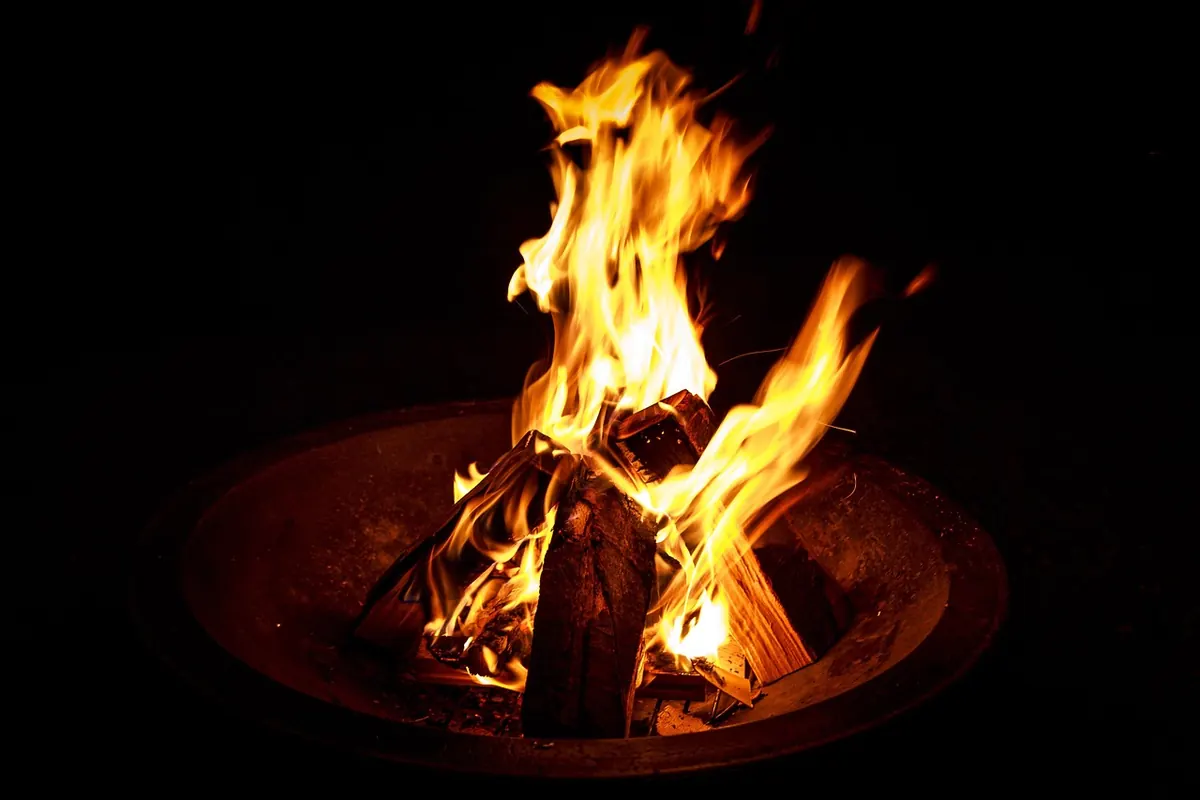
A small UK garden is a tricky place to keep warm. Fences cut the wind, patios hold the chill, and the seating area is often only a metre or two from a neighbour's kitchen window. Fire pits and chimineas both solve that problem, but they solve it in very different ways. One is an open bowl that warms a circle of people; the other is an enclosed burner with a chimney that throws heat and smoke in one direction. Choose the wrong one for your space and you will either smoke out next door or spend the evening with cold knees.
Heat Output: Directed Warmth vs Radiant Spread
A chiminea works like a small stove. Air is drawn in through the mouth, the fire burns hot inside a narrow chamber, and the chimney pulls the exhaust upwards. Most of the usable heat radiates from the belly and the opening, so it lands on whatever is directly in front of it. That makes a chiminea surprisingly effective for two to four people sitting in a tight cluster. Turn it and you warm a different group.
A fire pit does the opposite. Heat leaves the bowl in every direction, which sounds generous until you remember that hot air also rises straight up. A shallow bowl loses a lot of warmth vertically, and even a deep one tends to heat the shins far better than the shoulders. Where a fire pit wins is in numbers: six people around a wide bowl all get something. Two people around the same bowl get less each than they would from a chiminea.
Cast-iron chimineas have an extra trick. The metal soaks up heat while the fire is going and keeps radiating it for a while afterwards, so you can let the flames die down without losing the warmth immediately.
Smoke: The Deciding Factor on a Small Patio
Smoke is where small gardens get difficult. An open fire pit lets smoke rise freely until it hits moving air, then it drifts at roughly head height across your seating and over the fence. On a still evening it hangs; on a gusty one it changes direction every few minutes. You can move your chair, but your neighbour's open window cannot.
A chiminea, when it is drawing properly, sends most of its smoke up the chimney and above head height. That is a genuine advantage in a terraced garden or a courtyard. It is not magic, though. A chimney can smoke back into the garden if it is placed in a down-draught, if the fire is starved of air, or if you light it with damp wood.
Keeping smoke manageable
- Burn dry, seasoned or kiln-dried wood. Wet logs produce steam, tar and far more smoke.
- Build a small fire first, let it establish, then add a log at a time rather than filling the chamber.
- Site the unit so the prevailing wind carries smoke away from seating, doors and next door's washing line.
- Never burn painted, treated or varnished timber, and avoid pallet wood unless you know its history.
One thing worth checking: many UK towns have Smoke Control Areas, where only authorised smokeless fuels may be burned. Smoke from a domestic fire can also be treated as a statutory nuisance if it regularly affects a neighbour's property, and councils can act on complaints. Rules and enforcement vary by area, so if you are unsure, ask your local council before you buy.
Fuel, Cooking and Running Costs
Both appliances run happily on wood, and both will burn through a decent amount of it on a cold evening — expect a fire to eat two or three logs an hour once it is going well. A fire pit is the more flexible of the two: many take charcoal for grilling, and gas, bioethanol and gel versions exist for people who want flames without the smoke or the ash.
A chiminea is a wood burner, full stop. Its firebox is narrow, so you need shorter, thinner logs split down to size. That is a minor inconvenience, but it does mean a bag of logs lasts a little longer.
Cooking is the clearest dividing line. Fire pits with a swing grill, a plancha or a tripod are genuinely useful for burgers, vegetables and a cast-iron pot. A chiminea can take a grill across the opening, but the space is cramped and you will be working around the flames rather than over them. If cooking matters, buy a fire pit.
Footprint and Clearances
A fire pit is low and wide, so it needs floor space rather than height: a clear circle of non-flammable ground and roughly a metre of nothing combustible in every direction. A chiminea has a small base but a tall body, so it needs headroom instead — no overhanging branches, no awning, no pergola beams above the chimney. Its footprint is smaller, which is why it suits narrow patios and courtyards.
- Measure your seating area and check how many people it actually holds.
- Look up. Is there anything above the spot that could catch heat or sparks?
- Check the distance to fences, sheds, conservatories and bins.
- Confirm the surface — stone, concrete or compacted gravel, never dry grass or decking directly underneath.
Stability matters as much as clearance. Clay chimineas are heavy and can crack if knocked or left out in the rain; cast iron rusts without a cover. Whichever you choose, place it on flat ground and keep children, pets and loose cushions well back.
Which One Suits Your Garden?
Choose a fire pit if:
- You often have four or more people round and want everyone to feel some warmth.
- You want to grill, use a Dutch oven or cook over flames.
- Your patio is open and smoke can drift away without bothering anyone.
Choose a chiminea if:
- Space is tight and you want more heat on fewer people.
- Neighbours are close and smoke control really matters.
- You want a taller focal point that can sit near a wall, with the mouth facing your chairs.
The Practical Verdict
For most small UK gardens, a chiminea is the safer default. It works in a tighter footprint, sends smoke higher, and delivers more usable warmth to a couple or a small group of friends. If your priority is cooking, or you regularly host a bigger crowd and your garden is open enough for smoke to clear, a fire pit will serve you better.
Whichever you pick, put the money into dry fuel and a decent cover rather than a bigger burner. Buy the size that fits your seating, not the size that fits the shop display, and spend your first evening testing where the smoke goes before you commit to a permanent spot. An outdoor fire should extend your evenings, not your list of jobs.
Photo: Tommy_Rau / Pixabay