
7 Common Fire Pit Mistakes UK Owners Make (and How to Avoid Them)
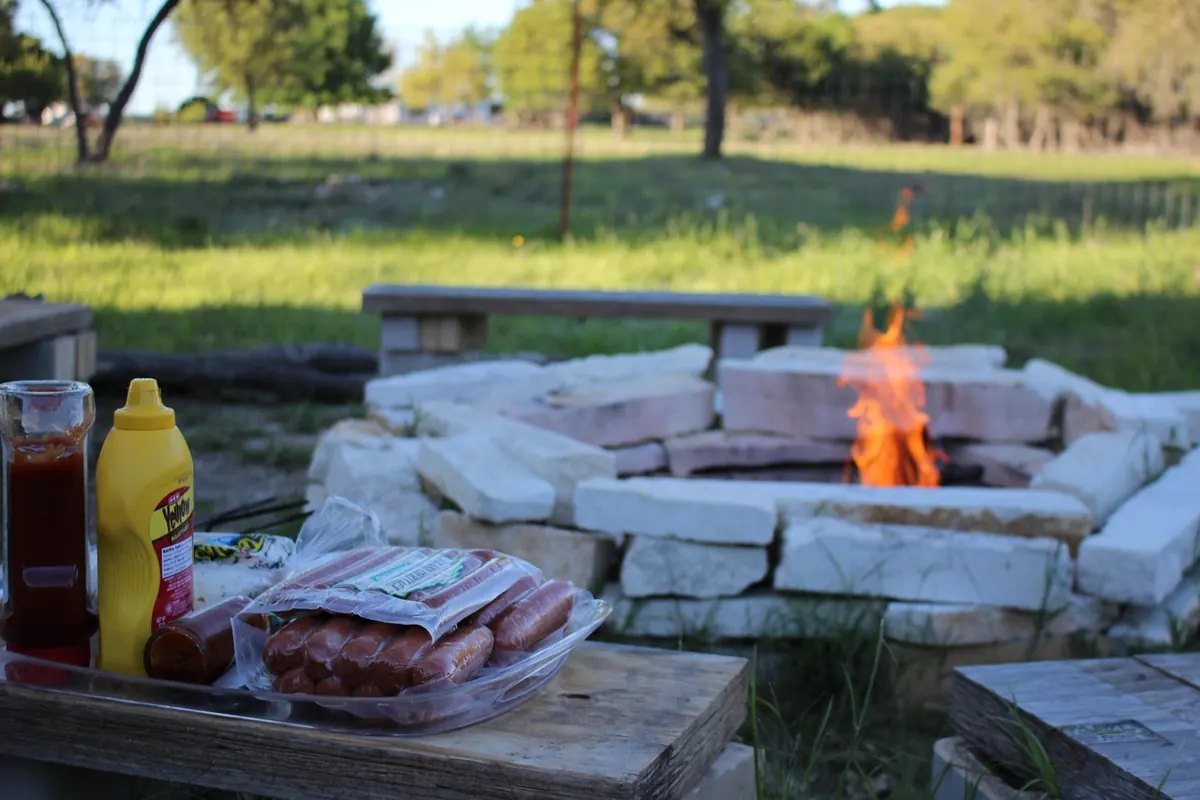
There's a moment when a fire pit stops feeling like a good idea. The smoke swings round and follows you whichever chair you choose. Or you lift the bowl an hour later and find a scorch mark on the decking you spent last summer sealing. Most fire pit problems aren't bad luck. They come from a handful of small, repeated mistakes, and nearly all of them are easy to fix once you know what to look for.
Here are the seven that come up again and again, with practical answers for each.
1. Starving the fire of air
Smoke is unburned fuel. If your fire smoulders, throws thick grey smoke and blackens logs without burning them through, the wood is rarely the culprit. It's the oxygen.
The usual causes: logs packed in tight, the bowl filled to the brim, ash blocking the vents underneath, or a pit with no airflow at the base at all. A fire needs air moving in from below and around the fuel.
- Build the fire in the middle of the bowl, leaving a hand's width of clearance around it.
- Stack logs loosely in a criss-cross, or lean them into a teepee so air can pass between them.
- Use a fire grate or raised basket if your pit doesn't have one built in.
- Clear the vent holes before lighting — a poke with an old metal skewer is enough.
- Once it's established, add one or two logs at a time rather than refilling the whole bowl.
A fire that's burning properly is bright and hot with very little visible smoke. If you're permanently shuffling your chair out of the way, the fire is telling you it needs more air.
2. Choosing the wrong base
Heat travels downwards as well as up. A fire pit sitting directly on grass will kill the lawn in a perfect circle, and one placed on a plastic table or a wooden bench is an accident waiting to happen.
What you want underneath is something non-combustible, flat and stable: paving slabs, a gravel or sand bed, bricks, or a proper fire pit stand with an air gap. A heat-resistant mat or a steel stand raises the bowl off the surface and lets air circulate underneath, which helps the fuel burn and keeps the heat off the ground. Check the ground is level too — a wobbling fire pit full of burning logs is not something you want to test.
Then look up and around. Overhanging branches, a fence panel a foot away, a parasol, a washing line, hanging baskets, the conservatory door. Give the pit a clear metre or more in every direction, and keep it out of the doorway people will be walking through with drinks.
3. Using a wood or charcoal fire pit on decking
Decking is the most common casualty. Timber decking can char or warp long before anything looks obviously alight, because the heat radiates down through the base of the bowl. Even a pit on legs can get hot enough underneath to mark the boards.
If you want a fire on decking, be deliberate about it:
- Use a pit designed for it, with raised legs and an air gap under the bowl.
- Place it on a paving slab or a fire-resistant deck protector, not directly on the boards.
- Keep it away from the house, the balustrade and any furniture fabric.
- Never leave it unattended, even for a few minutes.
- Consider a gas fire pit instead — no embers, no ash, and far less radiant heat underneath.
If you rent the property, or the decking isn't yours, check before you light anything on it. Damage like this is rarely covered by a casual apology.
4. Burning damp, green or treated wood
Wet wood spends its energy boiling off moisture instead of burning, which means a slow, smoky, disappointing fire and a lot of creosote-style deposits in the pit. Green wood behaves the same way. Seasoned, split hardwood or kiln-dried logs are the answer — you'll get more heat, less smoke and far less mess.
Skip the shortcuts. Painted, varnished or pressure-treated timber releases fumes you don't want to breathe, and pallet wood is often treated. Never use petrol, meths, barbecue lighter gel or any accelerant you wouldn't use indoors. A firelighter and dry kindling do the job perfectly well.
5. Overloading, then walking away
A fire pit is not a bin. Feeding it constantly to keep a dramatic blaze going is how sparks end up on fences and how bowls crack from the heat. Let it burn down between additions, and keep the flames inside the bowl rather than licking over the rim.
Wind is the other variable people forget. A breeze that felt pleasant at six o'clock can shift and send embers sideways an hour later. If it picks up, stop adding fuel and let the fire die down. And if there are children or dogs about, treat a lit fire pit like a hot oven — because that's what it is. Nothing burns down to "safe to touch" quickly.
6. Disposing of ash too soon
Ash can hold heat for a surprisingly long time. Warm ash tipped into a plastic wheelie bin, a carrier bag or a cardboard box has set fire to plenty of bins and sheds, often hours after the fire looked finished.
Wait at least a day, ideally two, before you touch it. Then scoop it into a metal container with a lid, put that outside on a non-combustible surface well away from the house, and leave it there before it goes in the general waste. Clean, untreated wood ash can go on the compost heap or the garden in small amounts, but leave ash from briquettes, painted wood or treated timber out of it. Never tip ash into a hedge or a dry flowerbed.
7. Ignoring where the smoke goes
Position matters as much as fuel. A pit tucked into a corner, against a wall or under a pergola will smoke you out and stain the surfaces above it. Give it open air on at least two sides, and think about which way the prevailing wind usually runs across your garden.
It's also worth knowing whether you're in a smoke control area, since some areas restrict what you can burn at home. Your local council can tell you, and it takes a minute to check online.
A quick check before you light up
Thirty seconds of thought prevents most of the problems above. Non-combustible base, level ground, clear space overhead and around. Dry, untreated wood, loosely stacked, with the vents clear. A bucket of water or sand within reach, and a fire that's never left alone.
And a sensible word on safety: never burn solid fuel indoors, in a tent, in a garage or anywhere without ventilation, as the fumes can be dangerous. If your fire pit connects to a gas supply, use a qualified installer for anything beyond changing the bottle. Get those basics right and the pit becomes what it should be — the reason everyone lingers outside long after the sun's gone.
Photo: jamie410 / Pixabay